 EN
EN


ARTWORKS
Satoshi Someya
(Photos 1 & 2)
Drawing in the Process | Kasumi Yui Nishiki Wan Zu
Year: 2022
Materials: Lacquer, MDF
Size: H400 W910 D30 mm
Photography: Reina Oya
(Photo 3)
Landscape Destination #2_230211
Year: 2023
Materials: Envelope, Stamp
Size: H315 W610 D20 mm
Guest Room: Room 302
Work Commentary:
“The Destination of Scenery—Beyond the Scene—” Satoshi Someya
In the field of crafts, as patterns are passed down, they are often abstracted or embellished by the maker, causing their original meaning to shift. A similar phenomenon can occur due to differences in the viewer's perspective.
For instance, just as foreign tourists might wear T-shirts with strange kanji, thinking “the design looks cool,” the meaning and role of depicted patterns can shift based on the viewer's perspective. Such “discrepancies” arising from misreading might be considered failures from an information transmission standpoint.
Yet, within these “discrepancies,” one can glimpse the history, climate, and folklore of the item's place of origin, revealing the fascinating “readability” of decoration.
About two years before the pandemic, I found an intriguing stamp online. It depicted a vermilion lacquer bowl, with “Ryukyu Post” in Japanese at the top left and the letters “3¢” in alphabet at the bottom right. At first glance, it seemed mysterious, like a stamp from a fictional country. In reality, it was a “Ryukyu Stamp” issued in 1968 under U.S. military rule in Okinawa. Among stamp collectors, it's known as a “dead country” stamp, treated precisely as a stamp from a country that no longer exists.
As I became drawn to the novelty of the stamp, a question arose: why was this lacquer bowl chosen as the stamp's motif?
This is because the pattern depicted on this lacquer bowl is known as “Landscape, Pavilion, and Figure Design,” a motif more commonly seen in continental Chinese crafts than in Ryukyu.
Further research revealed that this lacquer bowl is currently housed in the Okinawa Prefectural Museum & Art Museum. I requested and was granted permission to view the actual piece. Thus, the answer to why this lacquer bowl was chosen as a motif for a stamp symbolizing Ryukyu lay not in the pattern's [design], but in its [technique].
The landscape pattern applied to the bowl was rendered using “tsuikin” (堆錦), a unique Ryukyu decorative technique. At first glance, this lacquer bowl appears to be continental-style lacquerware. However, it was not an imported item but rather an unmistakably Ryukyuan-made piece called the “Vermilion Lacquer Landscape, Pavilion, and Figures Tsuikin Bowl,” which copied continental patterns. It then became part of a series of events leading to its use in 1963, after the war, as an image of “Okinawa (OKINAWA)” on Ryukyuan stamps intended for the U.S. military stationed in Okinawa.
Ah, I see, I thought, gaining confirmation of its Ryukyu lacquerware origins, while shifting my perspective slightly. How, then, did the Americans using these stamps interpret this landscape? Imagining they saw the location of this scene as “Okinawa (OKINAWA)” made the narrative held by this lacquer bowl suddenly feel expansive.
As mentioned earlier, patterns can be read (or misread) through different gazes, sometimes creating new narratives (or roles) for an object. Specifically for this tui-kin bowl, the setting of the depicted landscape traverses people's gazes. Depending on the viewer's shifting position, it could be said to shift from the mainland to Okinawa, from historical allusion to a different story.
At the very least, the landscape I see in this lacquer bowl—as one of the intended recipients of the stamp—reflects the historical narratives of Ryukyu and Okinawa, inviting me to imagine the intersecting gazes of various people. Simultaneously, it appears as an unidentified landscape, drifting moment by moment toward its next destination.
*This exhibition is based on works presented at the “Destination: Landscape” exhibition held at Hotel Anterum Naha in 2022.
PROFILE
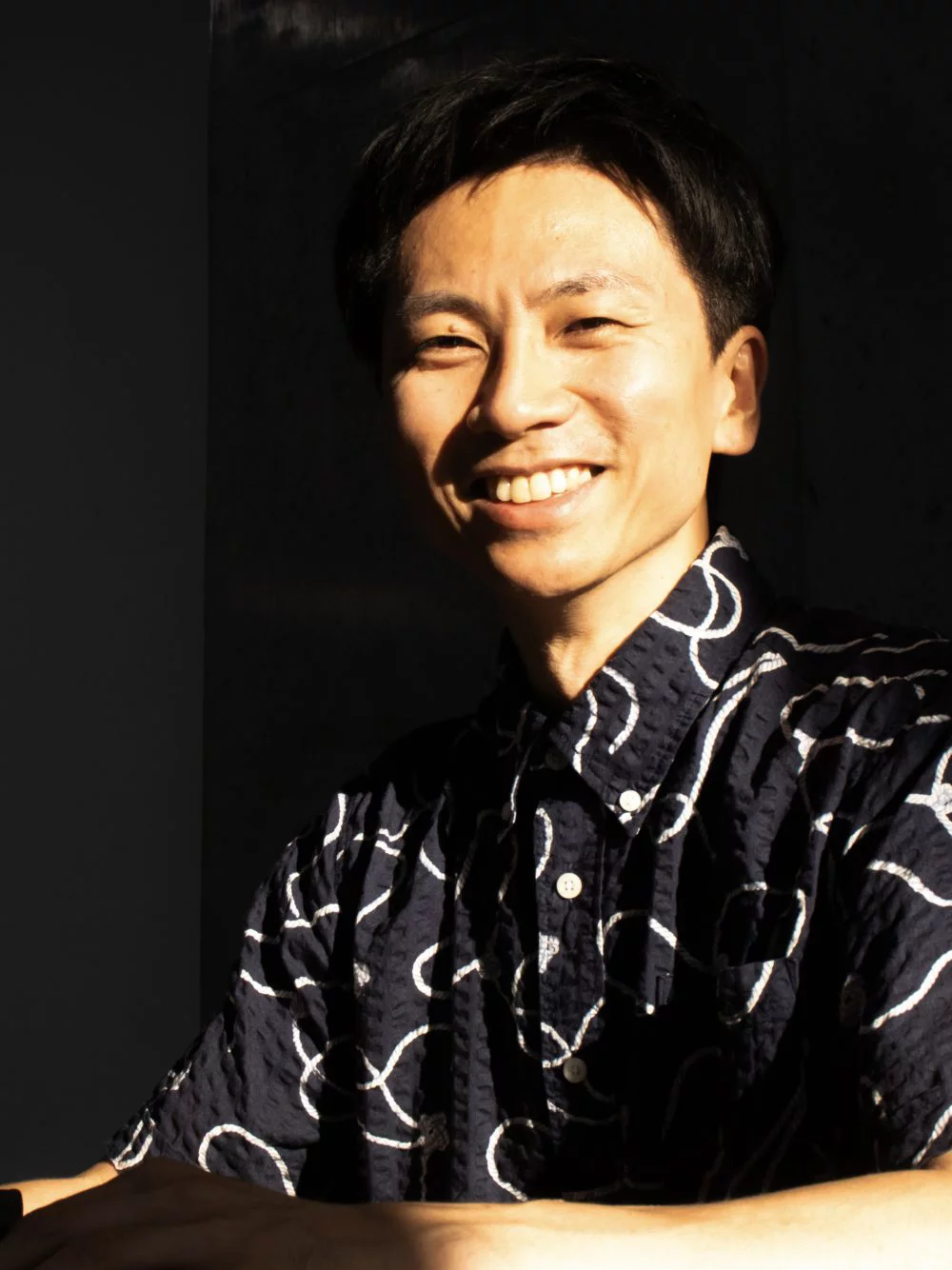
Born in Tokyo in 1983. Resides in Kyoto. Completed doctoral studies at Kyoto City University of Arts in 2014, earning a Ph.D. in Fine Arts.
Viewing decoration as “a form of reading material representing people's playfulness, emotions, and memories,” she creates works and conducts research primarily focused on lacquer decoration. In her recent Mistracing series, she investigates historical lacquerware and explores the contemporary roles of objects and decoration through her own works, which are intentionally miscopied reproductions.
Recent exhibitions include “Homage to Ryukyu Lacquerware” (Urasoe City Art Museum, 2023), solo exhibitions “Destination: Landscape” (Gallery9.5NAHA Okinawa, 2022) and “The Power of Roots” (Osaka Nippon Mingei Museum, 2021), “Sapporo International Art Festival: Special Edition” (Hokkaido Museum of Modern Art, 2020), and the solo exhibition “DISPLAY” (MITSUKOSHI CONTEMPORARY GALLERY, 2020).
Profile Photography: Hinata Maruo